Proper attic ventilation helps control heat, release excess moisture, protect insulation, and support the long-term health of your Washington home. Mold growth is a common concern for Washington homeowners because the Pacific Northwest’s damp climate can allow moisture to collect inside poorly ventilated attics. A balanced attic ventilation system can reduce condensation and limit the conditions that encourage mold growth and wood damage.
Attic moisture problems often develop slowly, and homeowners may not recognize an issue until they notice musty odors, dark stains on the roof sheathing, damaged insulation, or condensation inside the attic. Intake vents, exhaust vents, baffles, insulation, and properly sealed airflow pathways must work together to ventilate the attic effectively. Missing, blocked, or improperly installed vents can trap warm, moisture-filled air inside the attic. Understanding how these components work can help you identify ventilation problems before they cause costly damage.
How Does Attic Ventilation Work?
In a traditional vented attic, outside air enters through intake vents near the lower portion of the roof. As air moves through the attic, warmer air exits through exhaust vents positioned higher on the roof.
This continuous movement helps:
Release excess heat and moisture
Reduce condensation on the roof sheathing
Protect attic insulation from moisture damage
Support more consistent indoor temperatures
Reduce the conditions that encourage mold growth
Extend the life of roofing and structural materials.
For the system to work effectively, the intake vents must provide enough replacement air for the warm, moist air leaving through the exhaust vents. Adding more vents or installing an attic fan without evaluating the entire system may not correct the underlying problem.
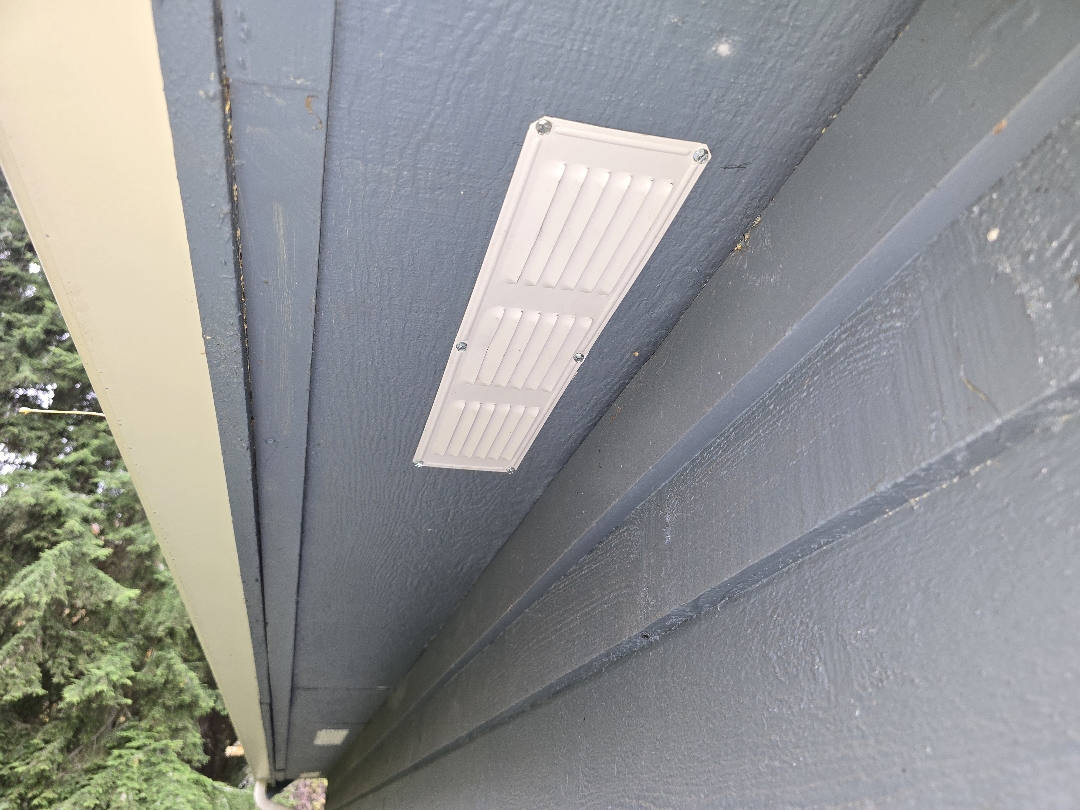
Soffit Vents Provide Attic Air Intake
Soffit Vent Installed to Improve Attic Intake Ventilation
Attic ventilation professionals install soffit vents along the underside of the roof’s eaves. These vents allow outside air to enter the attic, making them a primary intake point. They serve as a primary intake point by allowing outside air to enter the attic. Without sufficient soffit ventilation, the attic may not receive enough air replacement. This can limit airflow and prevent warm, moist air from exiting efficiently through roof vents.
In older Washington homes, soffit vents may be:
Covered with paint
Blocked by insulation
Clogged with dirt or debris
Missing from portions of the roofline
Too small for the attic’s ventilation needs.
Soffit vents allow fresh air to enter the attic, but they cannot ventilate the attic on their own. The incoming air needs an unobstructed path from the soffit vents into the attic and toward the exhaust vents near the roof’s highest points. Baffles help keep insulation from blocking this airflow.
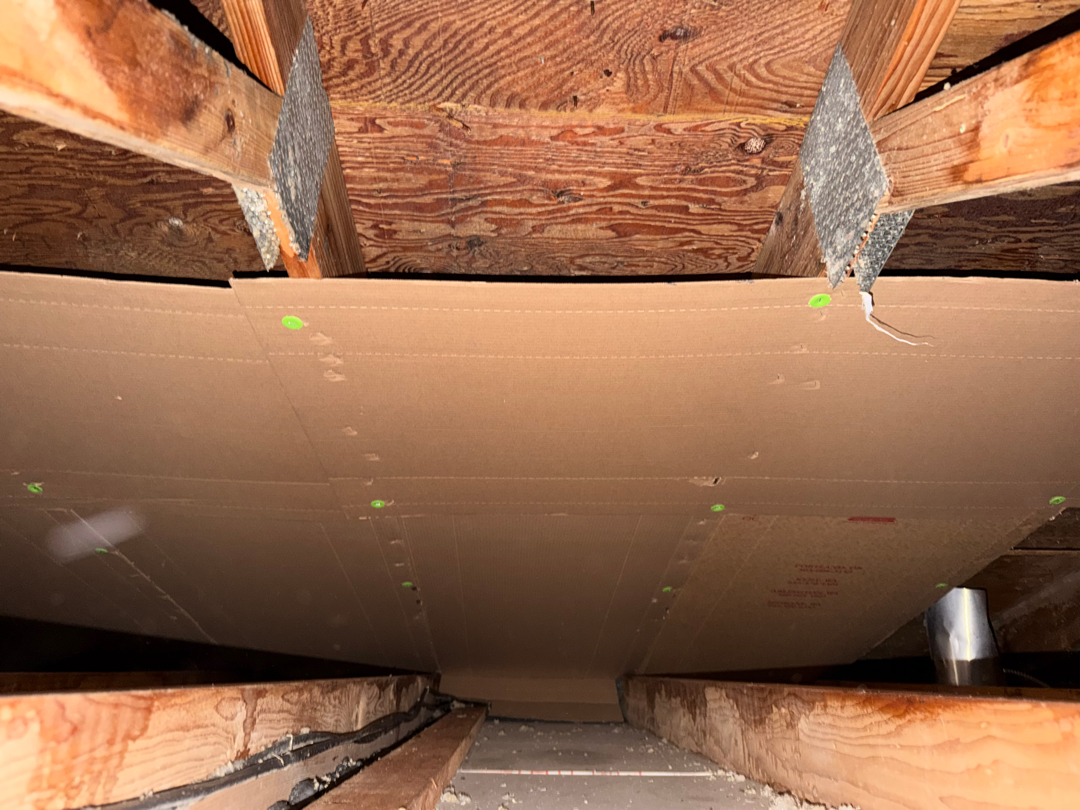
Attic Baffles Keep Airflow Pathways Open
Attic Baffles Secured With Fasteners to Maintain Clear Ventilation Pathways
Attic baffles, also called rafter vents or ventilation chutes, create airflow channels between the roof rafters near the eaves. They create channels that allow air from the soffit vents to travel above the insulation and along the underside of the roof deck.
Without baffles, insulation can shift and block the soffit vents from inside the attic, restricting airflow even when the exterior vents appear clear. Baffles also help prevent wind from disturbing loose-fill insulation near the eaves, keeping ventilation pathways open while supporting consistent insulation coverage across the attic floor. The Department of Energy’s Building America Solution Center explains that baffles prevent insulation from blocking soffit vents and preserve airflow beneath the roof deck.
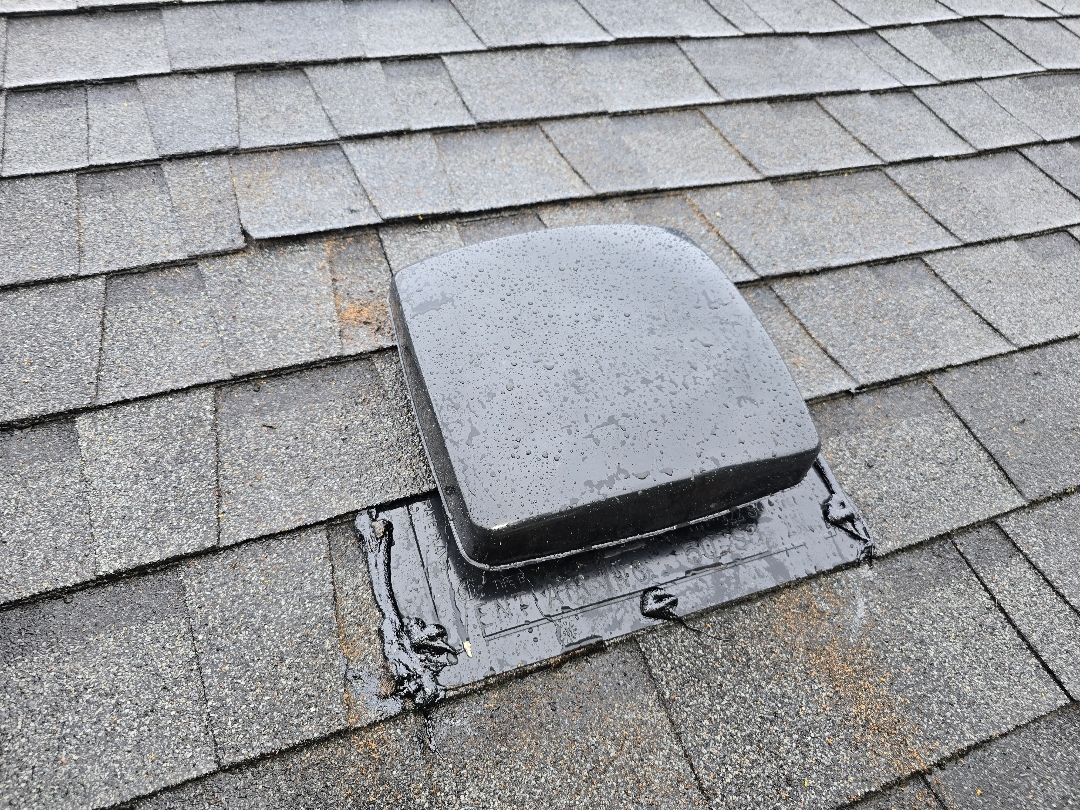
Roof Box Vents Release Warm Attic Air
Roof Box Vent Installed to Release Warm, Moist Air From the Attic
Roof box vents, also called static roof vents, support passive attic ventilation by allowing warm, moisture-filled air to escape near the upper portion of the roof without electricity or moving parts. The attic’s size, roof design, and available intake ventilation determine the number and placement of roof box vents. Complex rooflines may require a customized layout to ventilate isolated sections effectively. Too few exhaust vents can trap heat and moisture, while too much exhaust without adequate intake can create pressure imbalances and pull conditioned air through gaps in the attic floor.
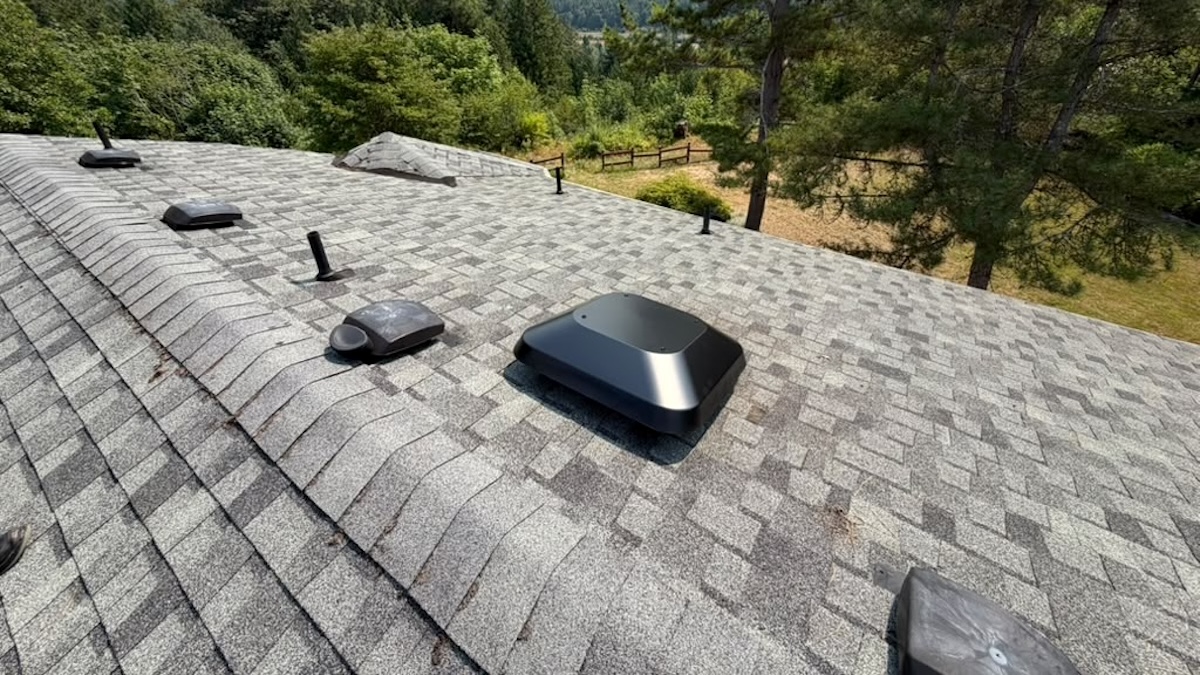
Roof Damper Vents Help Direct Indoor Moisture Outside
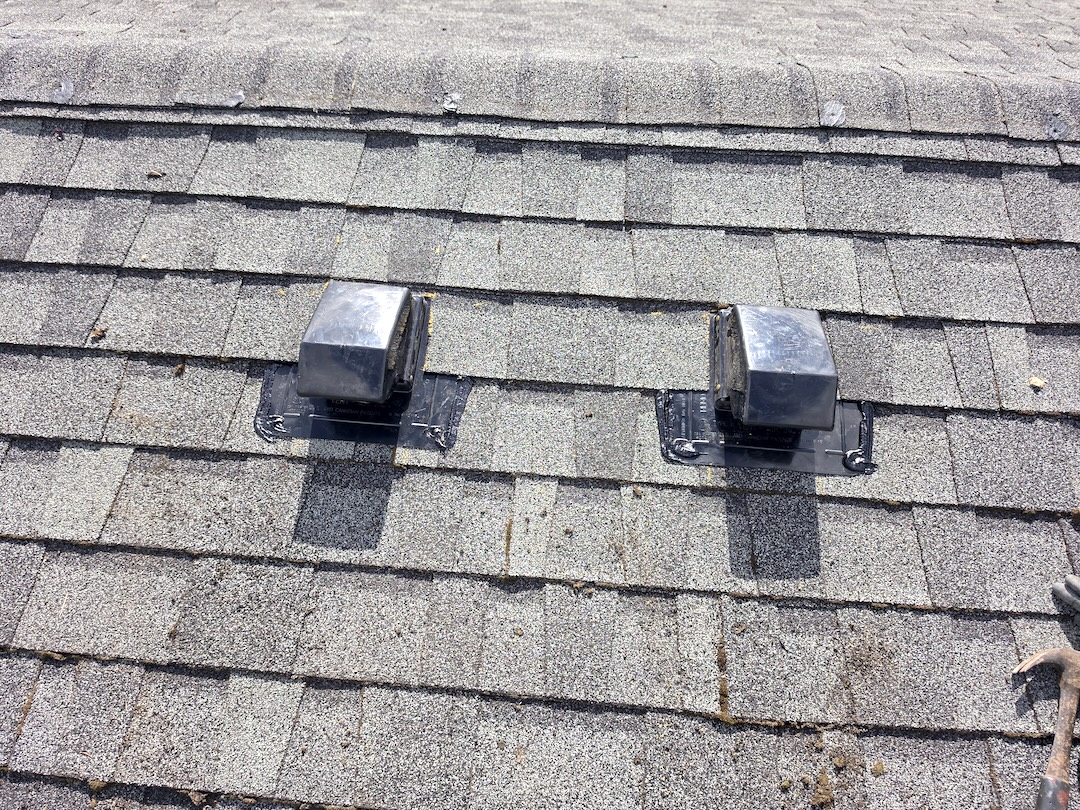
Two Roof Damper Vents Installed to Direct Indoor Moisture Outside the Home
Bathroom and kitchen exhaust fans should send warm, humid air outside through dedicated roof or wall vents. A roof damper vent provides an exterior termination point for the ductwork, while its damper helps prevent outside air, rain, and debris from entering the duct.
These exhaust systems operate separately from the home’s general attic ventilation system. Bathroom and kitchen fans should never discharge directly into the attic because they can introduce significant moisture that contributes to condensation, mold growth, and damaged insulation. The U.S. Department of Energy identifies exhaust fans venting into the attic as a major source of moisture and recommends directing the moist air completely outside the home.
Attic Fans Support Balanced Attic Ventilation
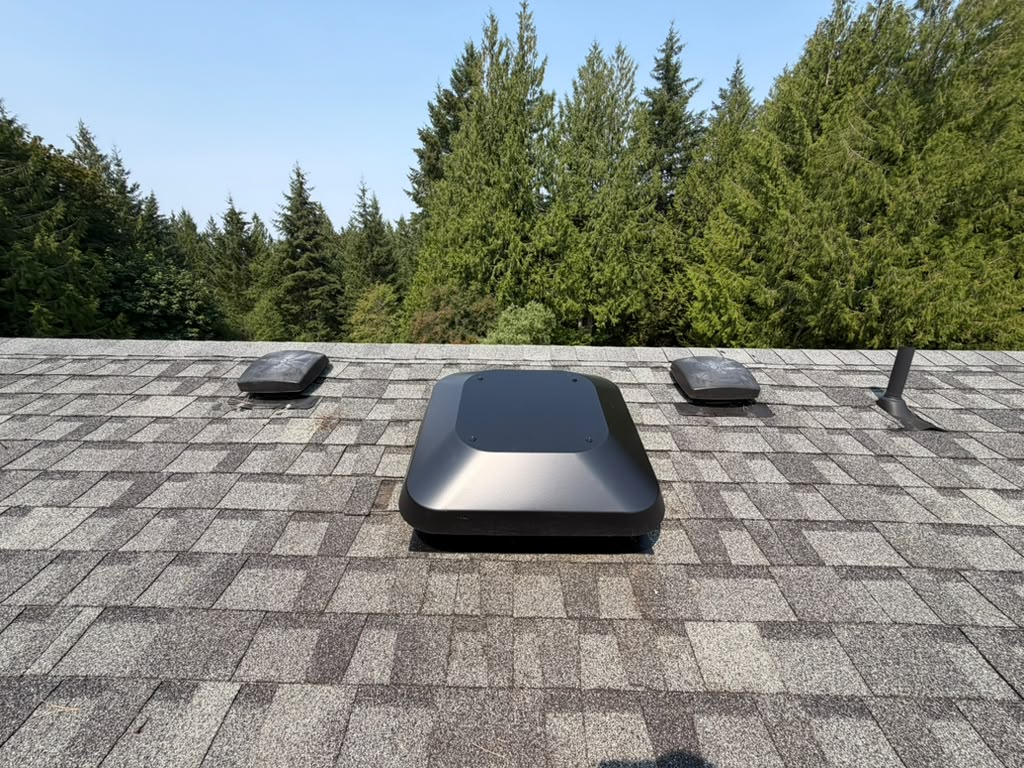
An Attic Fan Supports Airflows and Reduces Excessive Attic Heat
An attic fan pulls warm air from the attic and draws replacement air through the intake vents. When the home has a balanced attic ventilation system, an attic fan can help reduce excessive attic temperatures during warmer weather.
Before installing an attic fan, a professional should verify that the attic has adequate intake ventilation and seal air leaks between the attic and living space. Without enough intake airflow, the fan may pull conditioned air through recessed lights, plumbing openings, and other gaps in the attic floor. An attic fan also cannot correct roof leaks, improperly vented exhaust fans, or other direct moisture sources.
Air Sealing Helps Control Attic Moisture
Attic ventilation is only one part of an effective moisture-control strategy. Warm, moisture-filled air from the living space can enter the attic through gaps around:
Plumbing and electrical penetrations
Recessed lighting
Ductwork
Exhaust fans
Interior wall top plates
Chimney and flue openings
Attic access doors.
When warm indoor air reaches cold roof sheathing, condensation can form. The Department of Energy’s Building America Solution Center recommends limiting air leakage from the conditioned home into the attic as an important part of condensation control. Sealing these openings helps reduce the amount of indoor moisture entering the attic and improves the performance of the insulation and ventilation system. Seal attic air leaks before installing new insulation so the penetrations remain accessible.
How Professionals Correct Attic Ventilation Problems
The appropriate attic ventilation solution depends on the attic’s design, its existing condition, and the source of the moisture or airflow problem. A professional attic restoration may include the following steps.
Inspecting the Attic
Removing Damaged Materials
Correcting Moisture Sources
Improving Attic Ventilation
Sealing Attic Air Leaks
Addressing Mold Growth
Insulating the Attic.
Schedule a Free Attic Ventilation Inspection
Attic ventilation is a complete system, not a single product. In a traditional vented attic, soffit vents bring outside air into the space, baffles preserve the airflow pathways, and upper roof vents allow air, heat, and moisture to escape. Air sealing, insulation, and professionally installed bathroom and kitchen exhaust ducts provide additional protection against attic moisture. When these components work together, proper attic ventilation can help keep the attic dry, protect the insulation, and reduce the risk of moisture-related damage.
If you have noticed musty odors, visible staining, damaged insulation, condensation, or uneven indoor temperatures, schedule a professional attic inspection. Identifying ventilation problems early can help prevent minor concerns from developing into costly attic damage. Call us at (253) 315-0172 to schedule your free attic inspection.